Peaceful protester
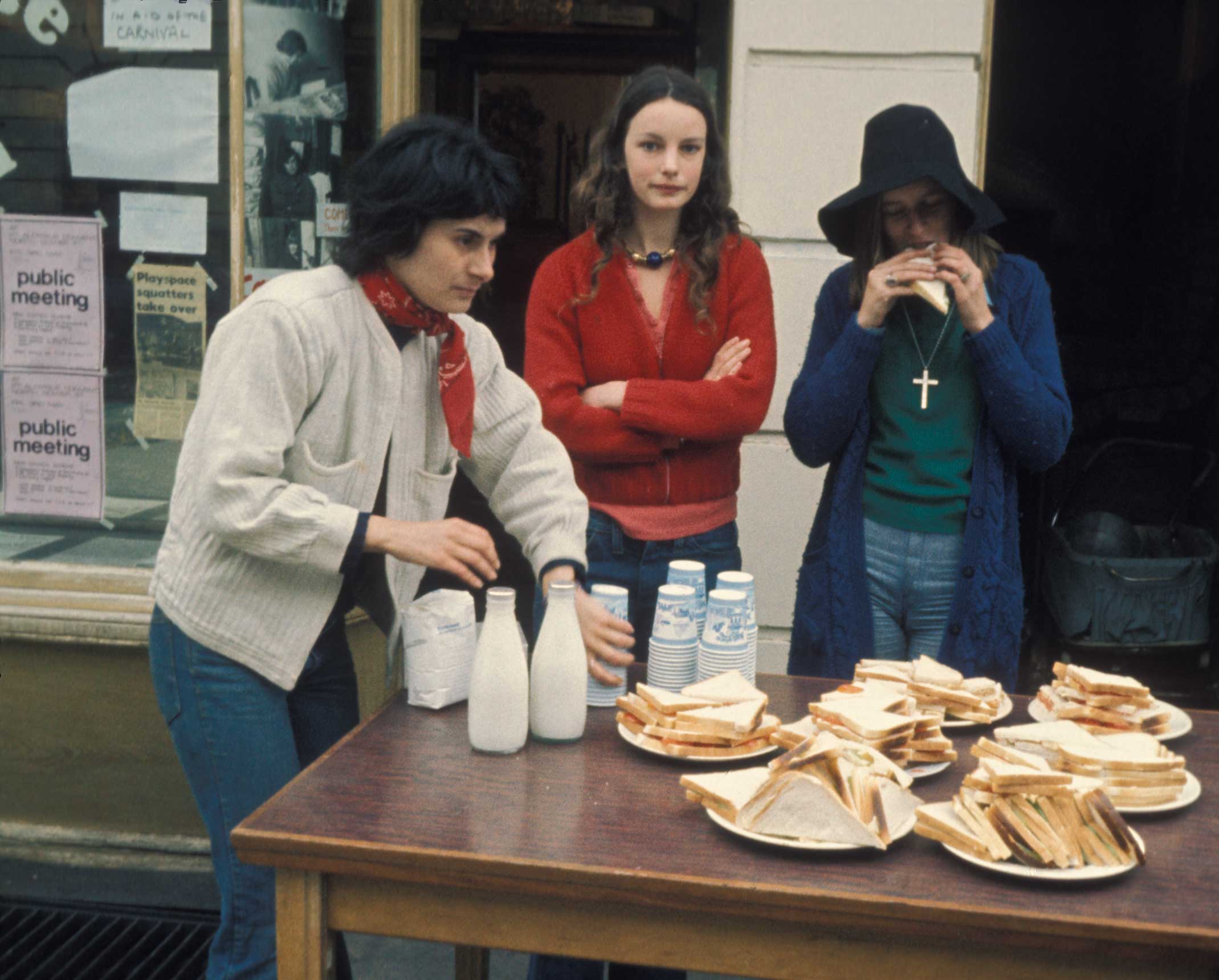
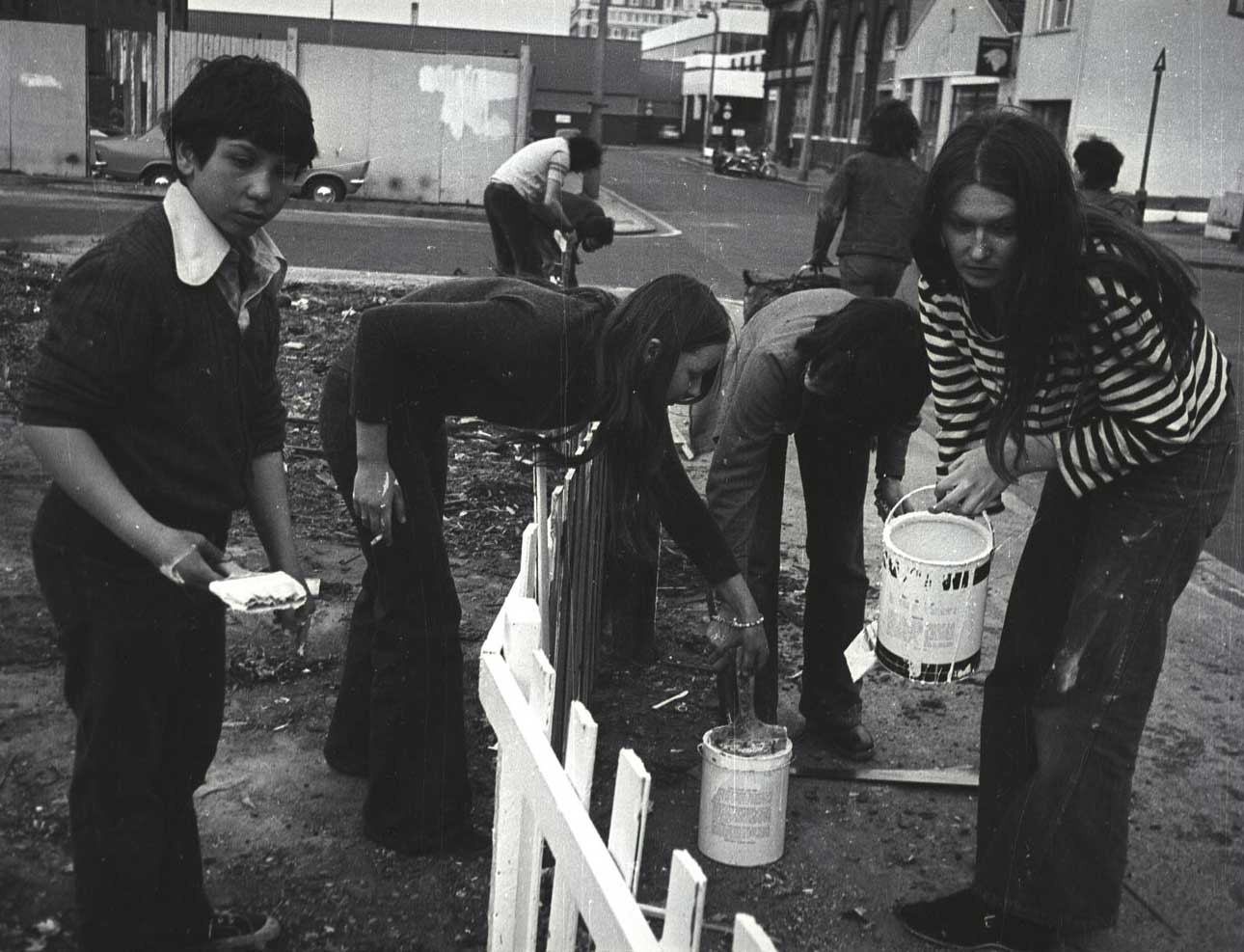
I came to Tolmers as an undergraduate student at the Bartlett School of Architecture, University College London (UCL) in 1973. I lived there throughout my course and my graduation in 1978.
When I selected the Bartlett to study architecture, it was a radical school. I soon learnt about the issues of Tolmers Square and joined the campaign. I lived as a squatter at 4 Tolmers Square and I remember clearing the basement which was full of rubble, a considerable physical effort.
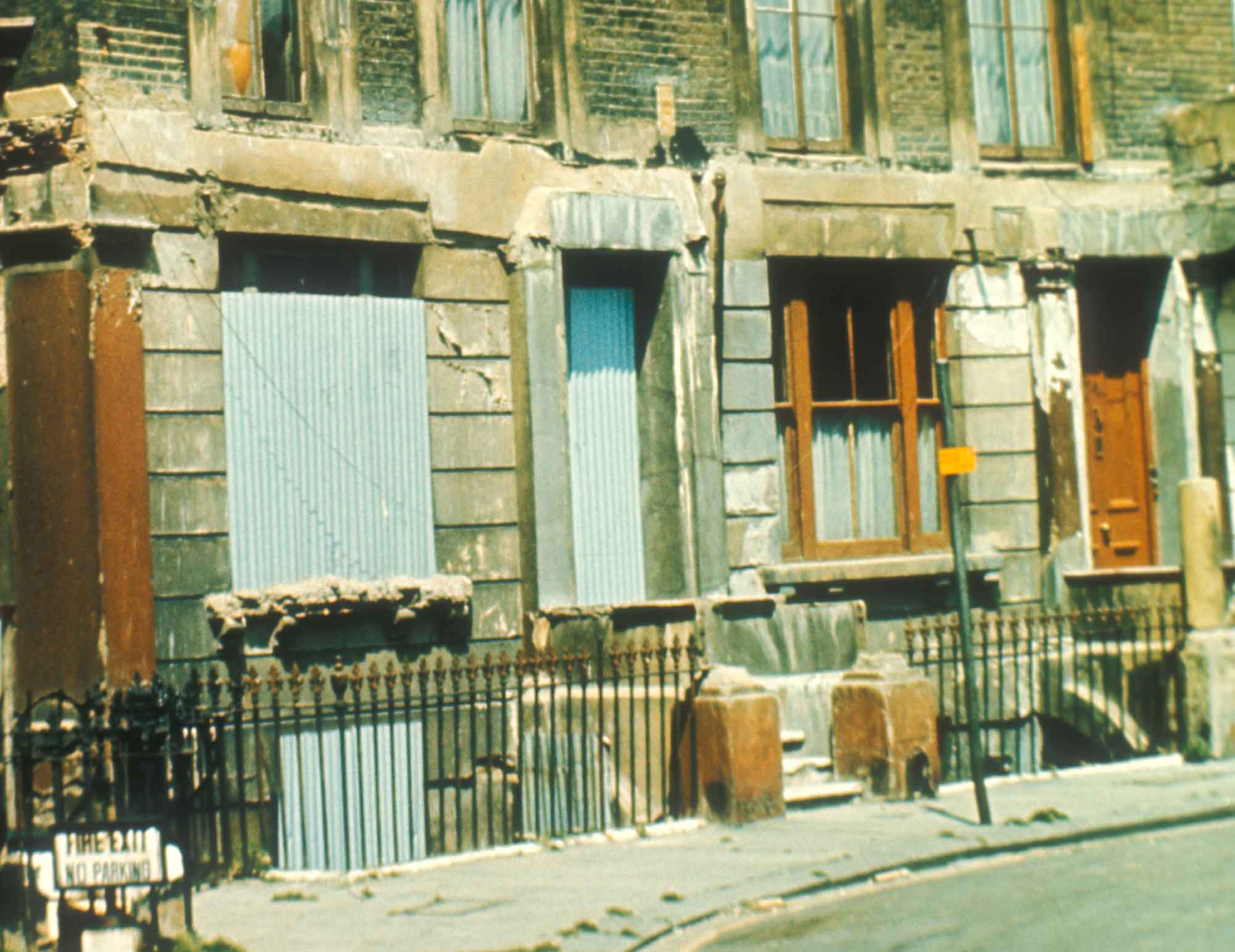
tenant, Adrienne, lived next door at number 5.
We welcomed homeless people to the house, including a young single mother and her child. My partner was an artist. He often made paintings and drawings of me in daily life, including in the bath which was in the shared kitchen. We had vegetarian housemates as well as two navvies who liked steak for breakfast – it was an inclusive and tolerant community.
I had my 21st birthday party there, but we went to the pub first. When we returned I felt the need to lie down upstairs, and only woke up the next morning.
I was involved in opening up a number of empty houses so that homeless people could have somewhere to live and Tolmers could be saved from demolition for speculative re-development. We would get people into houses and then apply for the electricity to be switched on, which was a right in law. The owners had to take the occupiers to court to get it turned off. A moment of glory was one day when a labourer came and dug a hole in the pavement so the electricity could be switched off. We simply filled the hole in again. When the electrical people arrived, they couldn’t access the cables, so they just went away.
Sometimes we occupied a house with no hot water service. People would have to shower at Euston Station, or take a bath at Senate House (part of the university).
I lived in Drummond Street for a while and became addicted to kulfi, Indian ice cream from the Ambala Sweet Centre. I also loved the Bhelpoori house, still in business when I visited many decades later.
During my time at the Bartlett, all the radical staff were sacked after a critical review from the Royal Institute of British Architects (RIBA) and a threat to withdraw accreditation. One project involved passing lemons around, and we had a tutor whose research thesis was searching for Atlantis. The RIBA didn’t understand. After this we were set a project to design a borstal, but I submitted instead a wall poster condemning the borstal system. Another project which I refused as meaningless was to make a drawing of a camera.
At one point we were all removed from the neo-classical quadrangle, bequeathed by Jeremy Bentham, with its beadles, to a new build office-block-in-disguise. This was built for the university as a ruse to get round Camden’s Office Development Permits. We painted the walls with graffiti in protest. As a punishment our budget for visiting lecturers was taken and spent on repainting the walls white.
Our work documenting the value of the Tolmers Square houses was not credited. About this time I also took part in recording the buildings of Covent Garden, then scheduled for demolition. Thankfully that campaign was successful.
I scraped through with a third class degree. I remember crits where I would be in tears from the very derisive comments by tutors. In one case I dreamed up a design for a home with a sunken circular seating area. Well it was pink. For encounter sessions I suppose. Years later, I visited a community in France with just such an arrangement.
I remember the wholefood co-op, a progressive idea then, but quite the norm now in my local suburb in Tasmania.
There were those who dreamed of barricades and molotov cocktails, and I would idly wish someone would blow up Euston Tower when it blocked the sky from the windows where I lived. But truly we were peaceful protesters and within the law. Perhaps now we would be branded as terrorists.
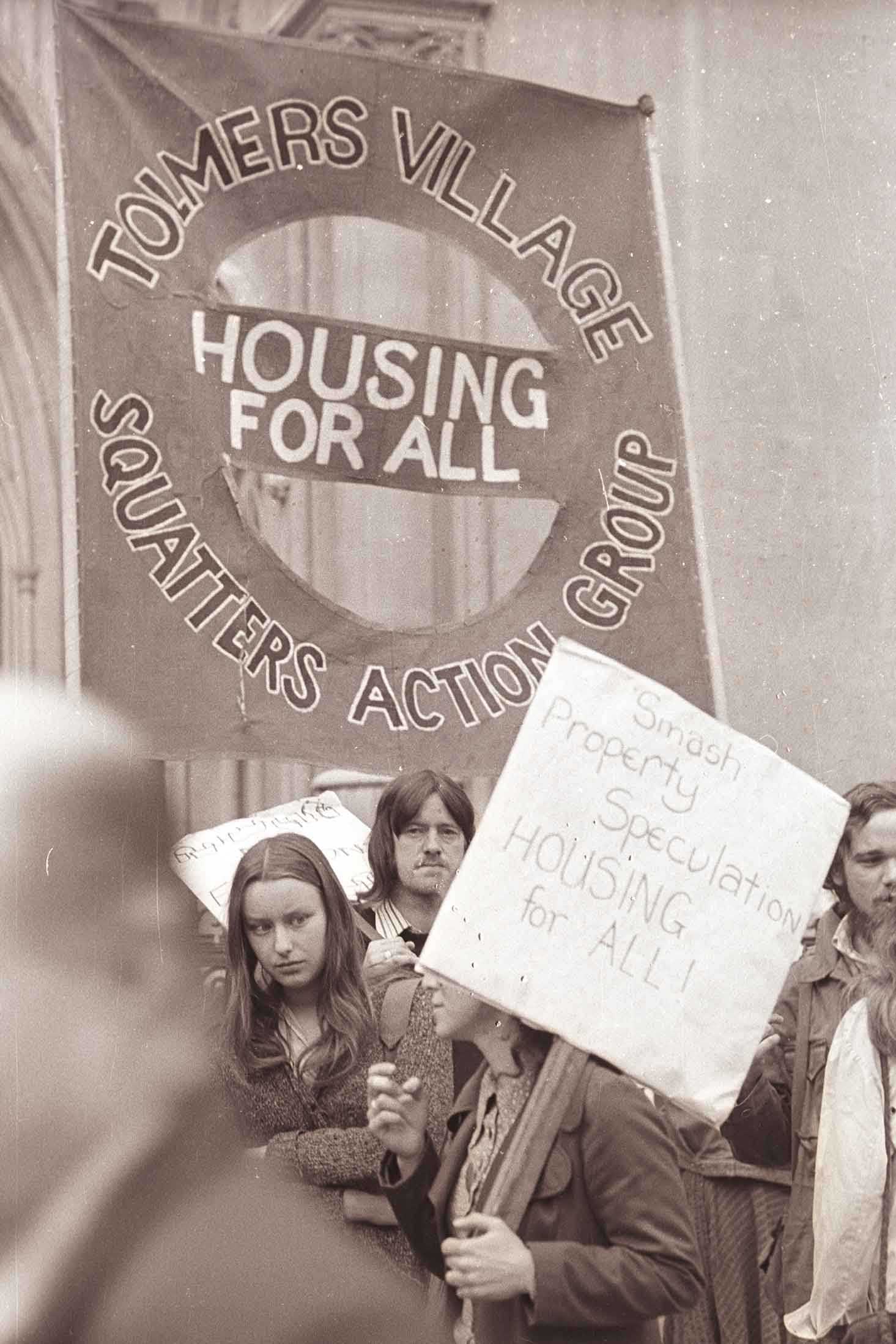
During my time at Tolmers I hitch-hiked to Portugal with my friend Lynne Farrow, seeing a country changing after a revolution without bloodshed.
When I graduated I wanted to practise social architecture; but Thatcher got into power that year. For her there was no such thing as society. I moved to Liverpool where my partner was from. There I found a movement to create housing co-ops for people whose tenement flats had been condemned as uninhabitable.
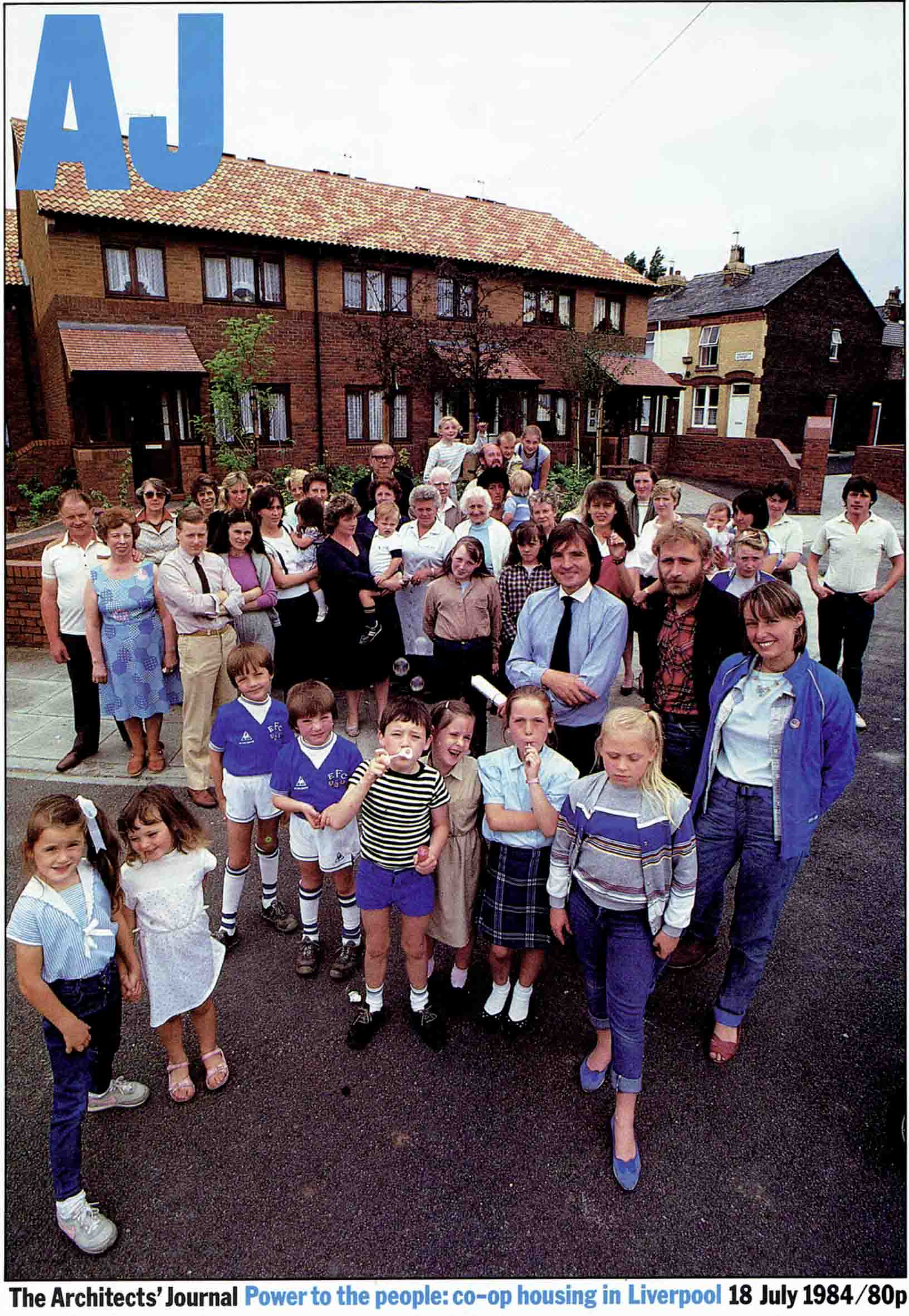
In later years I worked in Bristol with diverse community groups, including for homeless people. I think my experience in Tolmers set my world view to seek a practice for the people, and a deep mistrust of capitalist property development. The ravages of the Thatcher era reduced Liverpool to the poverty levels of Objective 1 status in the European Union. The riots in 1979 drew attention and some investment. I worked on projects funded through the EU, almost in spite of the UK government, which involved investment to revive the city, at least in parts. I worked with community groups making new uses for listed buildings that also attracted heritage funds for their repair. I continued with this kind of work when I lived in Bristol during 1982-4, and into the early 1990s. I also tutored at Liverpool University, teaching projects in community informed urban design.
In 1996-98 I took a two-year stint at the Chinese University of Hong Kong doing research about housing for the elderly there and teaching urban design projects.
After some 15 years as a community architect, I took a sabbatical and studied ceramics at the University of Tasmania. Eventually I settled in Tasmania and worked for 15 years as a heritage advisor for Hobart City Council then for Heritage Tasmania.
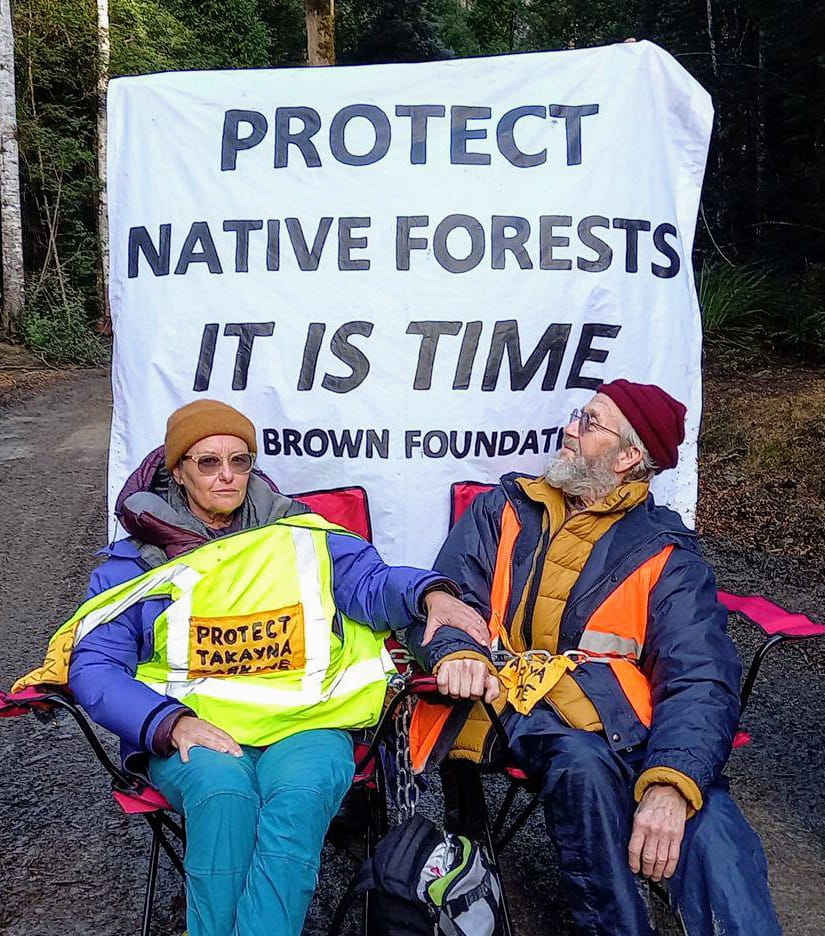
I have been active in the South Hobart Sustainsbility group and was arrested stopping the logging of some of Tasmania’s old-growth temperate rain forest.
Without a doubt, the experience of the Tolmers campaign played a significant part in shaping my contribution to community architecture, conservation and urban design.
Read more about the author Danielle Pacaud
More stories

Ringside seat
by Patrick Allen
The flat had a panoramic view over the square so you could see the comings and goings of everyone and the balcony was big enough to sit out on.
Georgian house in central London
by Patrick Allen
I had only been living in Tolmers for 9 months but in that short time had created a home, become part of a thriving community and found more than a dozen new friends.
American architecture student
by George B Bryant
My living conditions were primitive but there was electricity, water and mail delivery. I don’t know what I would have done had I not been able to live there.
Squatting under the bridge
by Andrew Milburn
I chose London because … well, London. I had grown up in a coal-mining town “up north” and wanted to go to the big smoke, where the ground-breaking stuff was happening.
Israeli outpost
by Atalia ten Brink
Barry rang and told me he was moving into a squat in Tolmers Square. In Euston, walking distance from the Central. Would I like to join him?
Tolmers picaresque
by Oli Arditi
Tolmers Village was a great place to be a kid—sometimes a dangerous place, for members of the small gang I ran with, and for the adults we occasionally terrorised.